
The Big/Small bet in Sic Bo is fundamentally simpler, not safer. This common wager attracts players with its straightforward 1:1 payout, creating an illusion of a 50/50 coin flip, but the mechanics at 22WIN and other legit casinos show a different mathematical reality. Understanding exactly why it’s not a true even-money chance is the first step to betting on it intelligently, rather than just hopefully.
Unpacking the Sic Bo Big Small Bet Fundamentals
The appeal of this bet is its simplicity, which is also its most misunderstood feature. A quick look at the betting mat shows two large areas, one for “Big” and one for “Small”. This makes it seem like the easiest choice on the table.
Core Mechanics and Why Players Choose It
The rules are direct. The dealer rolls three dice, and the game is based on the sum of their face values.
- Small: A bet on ‘Small’ wins if the total of the three dice is between 4 and 10.
- Big: A bet on ‘Big’ wins if the total of the three dice is between 11 and 17.
The payout for a winning Big or Small bet is 1:1. If you bet PHP 100, you win PHP 100 profit, and get your original PHP 100 stake back for a total return of PHP 200. Players gravitate towards this because it’s easy to track and feels like a balanced, low-volatility way to play. The constant action and frequent, small wins can be engaging. The primary troubleshooting point for new players is assuming this simplicity equals a fair game with no house advantage.
The House Edge – What It Really Means for Big/Small
Here is the critical detail that defines the house edge: if any Triple appears, both Big and Small bets lose. A Triple is when all three dice show the same number (e.g., 1-1-1, 2-2-2, up to 6-6-6). Totals of 3 (from 1-1-1) and 18 (from 6-6-6) are therefore not included in the Small and Big ranges. This specific rule is the entire source of the casino’s guaranteed profit margin on these bets. It’s not hidden; it’s a fundamental rule of Sic Bo. The problem arises when players either forget or don’t understand the mathematical impact these six specific losing outcomes have on their long-term results.
The Sic Bo Big/Small bet often appears safe but understanding its true odds is crucial.
Probability vs. Payout: Does Safe Mean Profitable?
The relationship between what a bet pays and its actual chance of winning is the most important concept in any form of gambling. For Big/Small, the 1:1 payout looks fair on the surface, but the probability numbers tell the real story. This is where a measured approach, not guesswork, prevents bankroll drain.
Exact Odds of Big and Small Outcomes
With three six-sided dice, there are 6 x 6 x 6 = 216 possible unique combinations. Let’s break down the wins versus the losses.
- Total outcomes for ‘Small’ (sum of 4-10): 108 combinations.
- Total outcomes for ‘Big’ (sum of 11-17): 108 combinations.
However, you do not win on all 108 combinations. The rules state that Triples cause a loss. The Triples that fall within these ranges are 2-2-2 (sum 6) and 3-3-3 (sum 9) for Small, and 4-4-4 (sum 12) and 5-5-5 (sum 15) for Big. Removing these leaves 104 winning outcomes each for Big and Small. Therefore, the actual probability of winning a Big or Small bet is 104 divided by 216, which equals 48.15%. The house wins on the 6 Triple outcomes (2.78% of the time) and also wins on the other bet whenever yours loses. This small but persistent disadvantage of 48.15% vs 51.85% is where the casino finds its edge.
| Bet Type | Winning Combinations | Total Possible Outcomes | True Probability | Payout | House Edge |
|---|---|---|---|---|---|
| Big / Small | 104 | 216 | 48.15% | 1:1 | 2.78% |
Common Misconceptions About “Even Money” Bets
The term “even money” is a misnomer here. It refers only to the payout (1:1), not the probability of winning. This is the single most common and costly misunderstanding. A true even-money bet would have a 50% chance of success, like a fair coin toss. The Sic Bo Big Small bet is not a fair coin toss. The 2.78% house edge means that for every PHP 1,000 you wager over a long period, the casino mathematically expects to keep PHP 27.80. While you might win or lose in the short term, this statistical edge is unbreakable over thousands of rolls. Thinking of this as a 50/50 proposition leads to poor bankroll management and flawed betting systems.
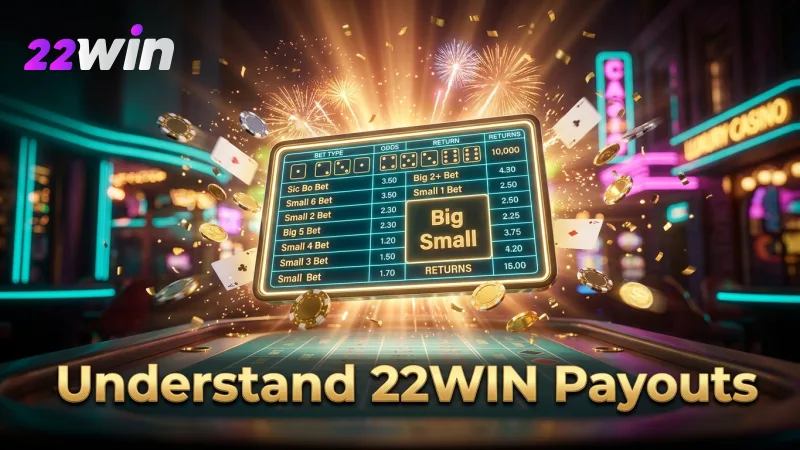
Probability tables for Sic Bo Big Small reveal the casino mathematical advantage over time.
Incorporating Big/Small into Your Sic Bo Strategy
Knowing the mathematical disadvantage doesn’t mean you should never place this bet. It means you must place it with a clear purpose and within a disciplined strategy. It’s a tool, not a get-rich-quick button.
Pairing Big/Small with Other Wagers for Balanced Risk
A sensible strategy uses the Big/Small bet as a base to extend playing time, while making smaller, more speculative bets on the side. For example, you could place a PHP 100 base bet on ‘Big’. Then, you might add smaller PHP 10 bets on specific Totals like 14 or 15, which offer higher payouts. If ‘Big’ wins, you get your 1:1 payout, which can cover the losses from the smaller side bets. If one of your specific totals hits, you get a significant payout. This approach balances the low risk of the main bet with the high reward potential of others. It’s a similar logic used in other games with varied risk levels on the table; some players apply this same thinking to the core bets and bonus segments in Crazy Time segment secrets to manage their risk across different payout levels.
When to Avoid Big/Small Bets: Red Flag Scenarios
The most significant red flag is chasing losses. If you’re down, the impulse to double your bet on Big/Small (a Martingale system) is extremely dangerous. Because the true probability is not 50%, a losing streak can be longer than anticipated, and the Triple rule can wipe out a doubled bet instantly. Avoid this bet when you find yourself believing in “streaks” or that a result is “due.” Each roll of the dice is a statistically independent event. A streak of eight “Big” results does not make “Small” more likely on the ninth roll. This is the gambler’s fallacy, a cognitive bias that costs players money in all games of chance, from dice to cards. The psychology of chasing patterns is powerful, and understanding the real odds helps fight it, which is just as important when evaluating Dragon Tiger card streaks as it is here.
Responsible Gaming and Trust in Sic Bo Outcomes
Playing Sic Bo on a PAGCOR-licensed site is the first step towards a fair experience. This ensures the game operates under specific regulatory standards for fairness and transparency. These must be checked before you deposit with GCash or Maya and start playing.
Understanding 22WIN’s RNG and Fairness Protocols
At 22WIN, our Live Casino Sic Bo games use a physical dice shaker, typically a clear glass or plastic dome. You see the dice tumbling in real time. There is no Random Number Generator (RNG) involved in this process; it relies on pure physics, which is why many players trust it. The result is plain for everyone to see. For automated, non-live versions of Sic Bo, the game is governed by a certified RNG. This is a complex algorithm that produces statistically random and unpredictable outcomes, simulating the roll of fair dice. These RNGs are rigorously tested and certified by independent third-party labs to ensure they are not biased. A player’s biggest troubleshooting concern is often a perceived “unfair” streak. The key is to remember that true randomness includes streaks and unlikely clusters of results. The casino’s edge doesn’t come from cheating; it comes from the mathematical structure of the payouts vs. the objective probabilities. All play is intended for adults 18 and over, and should always be done with a set budget you are prepared to lose.

22WIN maintains transparent dice rolling and clear payout rules for fair play.
The analysis of the Sic Bo Big Small bet is complete: it is a high-frequency, low-payout bet with a small but persistent mathematical disadvantage. It is not a path to guaranteed profit, but it can be a component of a broader, more disciplined betting session. The key is to never mistake its simplicity for safety and to always be aware of the house edge created by the Triple rule. Your bankroll management must account for the fact that you will win this bet slightly less than half the time. Ignoring this mathematical truth is the quickest way to deplete your funds.
